Showing posts with label group. Show all posts

Tuesday, August 24, 2010

not a book review: The Writing & Critique Group Survival Guide

.

"Urban Petroglyph" by Dot Hearn. From the Neighborhood Scavenger Hunt collection.


Yesterday I received a book in the mail from a friend. She ended up with an extra copy and wanted to share her spare - which I greatly appreciate. She and I have never met in person; we met through an online writing workshop a couple years ago - Ariel Gore's Lit Star Training for Wayward Writers. We also discovered that we are in the same pay-the-bills profession. Then later, that we both work part-time for the same company, in addition to the post-secondary and freelance work we do. Our small world grew smaller - although we still live nearly 2000 miles apart.

The book she sent me is, "The Writing & Critique Group Survival Guide" by Becky Levine. I have a stack of writing books - truly a stack - ranging from the traditional and new style & grammar guides, several perspectives on writing memoir (including Judith Barrington & Natalie Goldberg), general writing advice (Ariel Gore, Peter Brooks, 826, Sage Cohen), publishing (Bonnie Hearn HIll, Gotham Writers), and so on. Some partially read, some completely unread as of yet, a few completed. I thought I'd take a quick glance through the book and then add it to the 'nuts and bolts' section of my pile. (See, my bookshelves are all full. Yes, all of them - there are bookshelves in every room of the house except the bathrooms - and they are all full.)

I had an appointment this morning, after which I planned a treat of Morroccan Oatmeal and a latte afterwards at a nearby restaurant. So I took the new book with me for glancing. Much to my delight and surprise, I'm a couple chapters into the book. And I did not put it on my pile when I returned home to change and get ready for work; I put it in my take-to-work bag. I am already mulling over information from the beginning of the book and it is building on an idea I had last week about setting up a manuscript/book-length project group (which may start with 2 or 3 people).

It looks like my latest addition will be one of the "done" books before too long. I haven't read enough to give a review - but in my fast-paced life, I think it is a good testament that it's my carry-with-me book and that the author hooked me in right away.

Thank you, Christi, for sending me the book. Thank you, Becky, for writing the book!
.

Wednesday, June 11, 2008

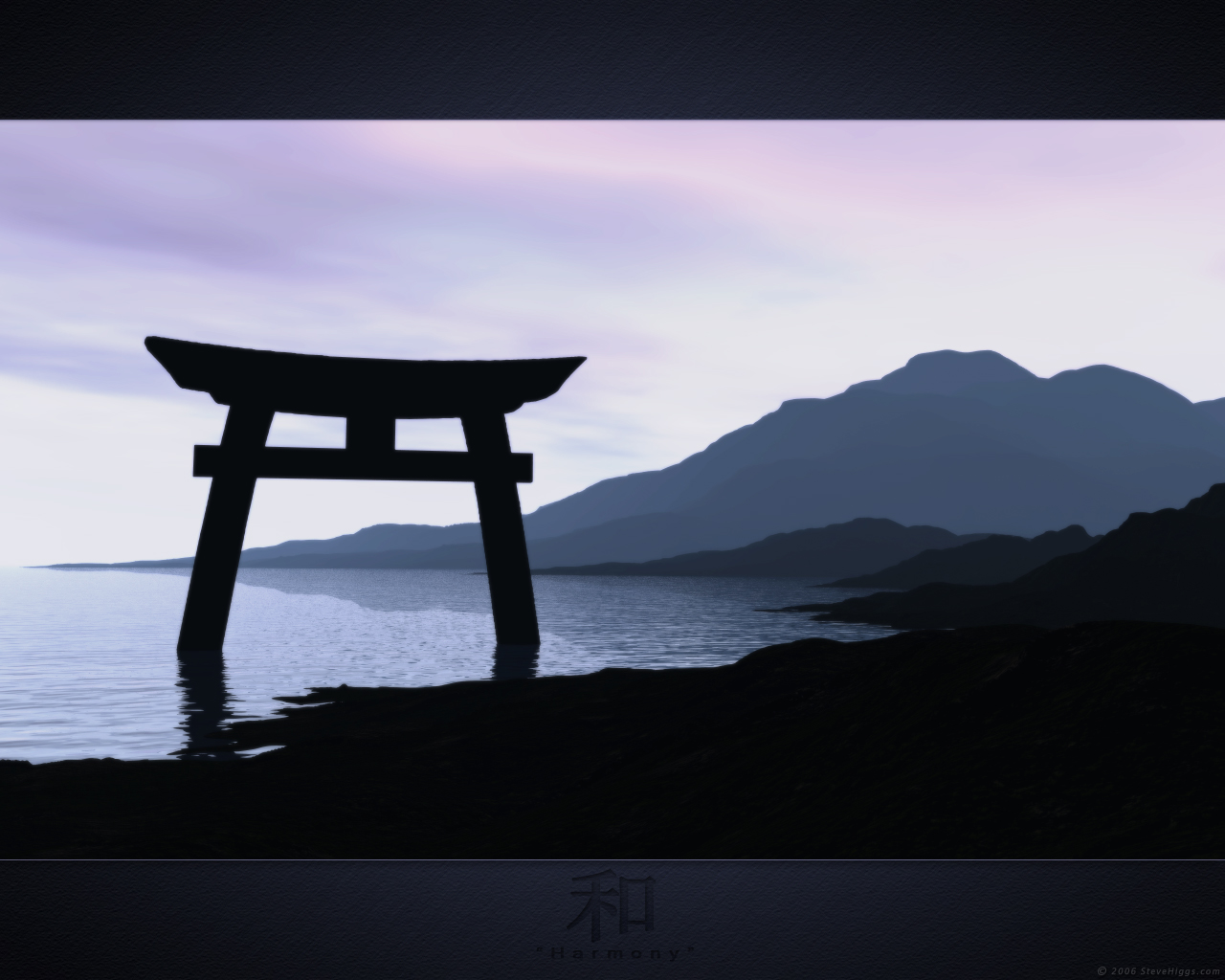
Harmony

I just started working out with a buddy today. I've been walking more, readying myself for nearly a month in Colorado, where I've been told the elevation is higher (well, duh, I know That!) and - oh, it will take a little getting used to. I will be without a car - though I may rent one for a weekend if I get a couple days off, so I can go see some sights - so walking will be the norm. Which is fine and is what I generally do most of my vacations - even though this isn't one of those.

So, I've been walking more. And I've been moaning about wanting to get back to the gym on a regular basis. And back to swimming which my body loves and I have a long list of excuses why it's been so hard to get there. And my schedule, which is true and yet...

...wait... I'm self-employed. Didn't I make that move so I could gain a little more control over my schedule? Yes. Oh, but it is a practice profession, which means the work available is based on others' schedules - but can't I still set some parameters?

I think I can! Once several commitments are completed, three of which come to an end this week.

So, I started planning for how to build in more time to take care of myself physically by increased time for exercise, adding back in swimming, and so on. And I really wanted someone to work out with because it's simply more enjoyable.

Then I received an email from a long-time friend whom I hadn't seen for several months. We met for lunch. She talked about her new workout and on the road to fitness routine and, voila! We scheduled our first walking date.

That was this afternoon and it was energizing and inspiring and fun. We walked for over an hour; challenging ourselves on, first, a little incline and then we saw a steeper one off to our right. We got to walk down it first, our cool down, and then walked back up; it was about double the steepness of what we'd just done. It was about 80 minutes of just wandering and seeing where we ended up and then finding our way back to our cars. And we have our next date set to approach Mount Tabor and maybe take the first flight of steps up. We've set ourselves the goal of walking up all of the steps to the top, but that will come over time.

Despite not really having any communication for several months, we have been wanting similar things: someone to travel this path to wellness with who doesn't mind a little sweat and is willing to just see where we go.

When we met today, she gave me a little pewter bauble with a leaf on one side and Harmony written on the back. It was, indeed, a moment of harmony that we connected at this moment and have found a new shared interest. Neither of us had any idea when we planned our lunch date last week.

I also know that taking a little more control of my schedule and returning to more physical activity will be a bonus for my writing. I can already feel the juices flowing again. And after I'm done with all of my grading and evaluations and this next show is done, I know I'll be using some of the time I've blocked out for just that.

Ahhhh.
photograph, Harmony, by Steve Higgs

Tuesday, April 29, 2008

I AM

A spoken word piece by Eric Mata

I want to update my K-inspiration image (K as in a mathematical constant) and I want to preserve this video in my blog, so I'm moving it to the contents section.


Wednesday, March 12, 2008

Diptychs and Corpses

There is a bi-coastal encaustic project, The Diptych Project - A Collaboration in Wax, with artists from Portland, OR and Portland, ME which will be showing in April. This has been in process for several months between members of the International Encaustic Artists Guild on the west coast and New England Was members on the east coast. The members were randomly paired. Each artist made one original work, which was mailed with a blank foundation of the same size to her partner. So the original pieces crossed mid-country and arrived at their destinations, where the partner's project was to make a companion piece. The meaning of companion was left to the individual artists. Some of them are mates or a second half; some are more call and response. The next step will be for each coastal group to show the diptychs in their possession at a local gallery. The diptychs here are the originals from Portland, ME, and the response from Portland, OR, and they will be on display and for sale at the Brian Marki gallery April 4 - 30.

Writers often take ideas from somewhere or someone else and build on them. Or we write in response to something we see or hear or smell. But what if we found another writer with whom to create a written diptych? Each person write the beginning of a story, exchange them, and then the other person finishes it up. Or two poems, or the first 5 minutes of a 10-minute stage script. There are several variations on this for writing. One example - which can be really fun, especially with a medium size group (around 10 people) - is the "exquisite corpse" exercise : each person writes down an opening sentence from the same word prompt. Then all the paper is passed to the right (or left, doesn't matter) and the second person adds a line. Then person two folds the paper backwards just so the first sentence is not visible and the paper is passed to the next person. This continues until you are back at the beginning (one group I did this with, each person put a symbol they would recognize in the bottom right corner of the paper so they'd know, since the first line is no longer visible). Each person turns the paper down so that only their sentence is available for the next person to work with. When it is done, go around the group and read the creations from beginning to end. This is a great group cohesion exercise and can be a lot of fun with lively and wild stories.

Diptych by Serena Barton, IEA (top) + Dawna Bemis, NEW (bottom, "What If They Find Out", 36" x 18"

Monday, March 3, 2008

I can write that story in ....

In 1953 there was a television show called, "Name That Tune." (Don't worry if you remember it but swear you aren't that old - there were several incarnations of the show during the 70s into mid- 80s!) It was a contest to see who could identify a song in the least number of notes.

Several times over the past two weeks I've run into articles or conversations about writing where the goal is something like "I can tell that story in..." some minimal number of words. The most extreme was an article I read last week about an entire book of six word biographies. Then, again, yesterday at the writing seminar the topic of abbreviated story telling was raised. The facilitator started us off with a story about someone challenging Hemingway to tell a story as succinctly as possible. Hemingway said he could do it in six words and wrote: "For Sale: baby shoes. Never used." Hmm!

The seminar facilitator did not challenge us to do it in six words. He did challenge us, however, to do it in six sentences and gave us 30 minutes to write. There is a website, Six Sentences, which publishes pieces that are, obviously, six sentences long. So we wrote and I had a basic story flowing. I had the closing idea, but not the exact structure at the end of the 30 minutes. Perhaps that is my next step: to do some practice at sketching out a short write quicker and then go back to fill out the details and tweak the "colors". I like that process in art, the quick sketch to capture movement and impressions, then add the layers while maintaining the initial gut-level laying down of the vision. We left the seminar with the challenge of developing a piece over the remaining time together which is six paragraphs; I haven't started that one.

This morning an email from the facilitator urged me to tighten up - or "snap," as he put it - the end and then submit it to the website. I will admit with minimal embarrassment that the email was needed and, once again, synchronous. Because of the reminder, I stuck the nearly completed six sentence story in my bag and headed out to my various appointments today. One of them was to facilitate my Write Around Portland group - always a boost of creative energy and something I love to do. Even if it's a day with things happening in the room which prevent me from going deeply into my own writing, it primes the pump for creative juices later. Which is what happened today.

I left the writing group with enough time to get to my next destination and to grab a cup of soup and some coffee. I thought I'd take a look over the six sentences and see how I could convey what I wanted more concisely. I was in line behind a person who couldn't decide between the raspberry jammers or the cheese danish. My phone vibrated once, signaling a text message. It was the student interpreter I was supposed to be observing shortly telling me that the client wasn't going to attend tonight, so we needed to reschedule my observation.

There it was - the extra time I needed. I decided to just order coffee and go to one of my favorite writing spots where I knew I could spend two hours, if needed, to finish up this little piece. And I did. It didn't take two hours, although if I count the thinking about it time while I ate dinner, it was two hours. I wrote it up at the restaurant, then came home, typed it up and submitted it. Now I get to wait - I bet you can guess - six days to see if it is accepted.

It was a good exercise. Some of my sentences are longer and filled with visual detail. I did it.

There is more to come on this topic of short shorts, flash fiction, and our very busy lives. But, for now, I wrote a piece in six sentences and it contains all the elements of a story. Good for me. And I wonder...

Slice of Heaven

by Dot.


Billy Jo reached into his brown paper lunch sack and pulled out the expected unidentifiable sandwich in a pleated baggie. He sat down on the metal beam, dangling his legs over the edge, and balanced the sandwich on his left knee. He peered into the mouth of the bag to see what else Doris had managed to scrape together: a too purple Red Delicious apple, a bag of Granny Goose potato chips, a can of Select cola, and a pair of her godawful oatmeal raisin cookies. Billy Jo removed the soda and dropped the sack between the beams, where it would join the unwanted remains of previous lunches and piles of construction debris. With the first bite of sandwich his gaze moved from the cars and cabs and buses below to the sumptuous feast in his hand: braunschweiger with stone ground mustard, red onion, and butter lettuce winked back at him. Without looking he knew Doris had found the ten dollar bill hidden in the lining of his wallet and with the second bite, he didn’t care.


[top] Bamboo : a Sumi-e painting by Dot.

Friday, February 29, 2008

Prompt: A New Community Writing Workshop

Write Around Portland has a new program: a workshop designed for writers in the greater-Portland area who want to take a Write Around workshop but may not belong to the traditional communities we serve. This provides long-time supporters a chance to write in community with others following the Write Around model while also providing support to writers who might not otherwise have access to writing and community.

All proceeds go directly toward funding Write Around Portland programs, including workshops for people affected by HIV/AIDS, veterans living with PTSD, those with physical or mental disabilities, and others in Portland without access because of income, isolation or other barriers.

Details:
Meets weekly for 10 weeks April 8 through June 10, 2008
Powell’s Books, Burnside
Tuesdays 7-9pm
$285 (includes free parking, snacks and access to the “bowels of Powells”)
Facilitator: Natalie Serber

Join them for a weekly seminar devoted to generative writing and the transformative power of writing in community. Based on the successful Write Around Portland model, this dynamic workshop incorporates many of our favorite exercises designed to inspire the writing life, including free-writing; group discussion; imagery, character, plot and poetry development; and early-draft revision. Group-members will have an opportunity to read their work at a local reading to cap the course. Natalie Serber holds an MFA from Warren Wilson College. She has been short-listed for Best American Stories, and is the recipient of the Tobias Wolff Award for Fiction and the John Steinbeck Award for Fiction. Natalie is a seasoned Write Around Portland facilitator and board-member, and also teaches through Literary Arts’ Writers in the Schools and Community of Writers.

Want more information? It's available on the Write Around Portland website.

Wednesday, February 13, 2008

Plant One Seed

I'm a volunteer for Write Around Portland, where one thing I do is facilitate writing groups. This week started my second group facilitation and the first time facilitating a youth group. There were some obvious differences between the first group of all adult women ranging from around 25 to 65, and this one with mixed genders, though more homogeneous in age. They're so obvious I won't even go into them. *smile.

It was one of those situations where the training and the theory are known and yet the experience in the moment is more powerful than just the words can convey. The advice about bringing double the number of prompts I'd normally use in that time period and having to be a little more directive than with adults were played out in 3-D living color. Despite a couple of disruptive participants who decided to not come back after the break, everyone wrote when given the prompts. Most of them shared and were able to give each other some feedback.

I felt good about how it went and a little exhausted from the extra energy required for facilitating the meeting with the teens, which I wasn't quite mentally prepared for - even though I knew. I cleaned up, packed up my things and left.

Driving to my next appointment, I thought about one participant who had said he wouldn't share his writing. He wanted to write, but wasn't good with public speaking. I encouraged him to think about sharing later, but assured him he would never be forced to share his writing. On the second prompt and every one after, he had read what he'd written. That one step of bravery and willingness to try something new pushed aside all of the stress of the first half of the group.

The next day I checked in with my support staff about how it went. She listened, offered some ideas, and gave me good feedback about decisions I'd made and how things went. That's one of the wonderful perks of volunteering with Write Around Portland: the staff. They are some of the most genuinely caring, compassionate, and supportive people I have ever been around; their honest passion for what they are doing is evident in everything they do. And they are completely there for the volunteers and workshop participants. An amazing group. I felt comfortable with how things had gone on the first day and ready to make my plans and get back in there with the teens for the next one. My direct support staff was great. The kids were great. I was great. And this would be another awesome experience.

Today I received a call from the contact person at the site. There were a couple things we needed to discuss. And she wanted to let me know that she has heard great feedback about the first meeting from all of the teens who stayed for the whole time.

And the best information was that one of the participants is hiding his journal (each participant receives a journal from Write Around Portland) in the desk. He takes it out several times during the day and is writing. That little gem, along with the one who read his writing in spite of his protestations that he never would, makes it all worth it. It would be worth it, anyway. But I can already see the seeds germinating.

I realize they may or may not take root this time around. But the seeds are planted. And, at least for now, there are two teens who are expressing themselves who might not have been otherwise. I was there as witness to their process and will be there to see how they grow.

This is the reason I volunteer. To even see the change for one person, or two - to be able to provide resources and a place that is safe for someone to reach out a little.

So it's a little more challenging! Life isn't always easy and a little challenge keeps me from getting bored or frustrated by monotony. I'm being challenged to step out of my comfort zone and my usual circle of interaction, too.

Think about one seed you have planted recently and write about it.

Tuesday, February 5, 2008

Interference

I have had a couple of unexpected positive challenges in my current writing group. One has been working in a different writing group format than I tend to do and a structure different than I expected; the second is that the predominant genre of the group is not mine.

In previous writing groups, everyone writes outside of the group and brings something every week to share. The writer passes out copies of the piece, reads the work out loud, and gets on-the-spot feedback. With one group, since people were writing longer pieces, we didn't get to everyone every week, so we took the stories home we didn't discuss and started with those stories the following week. We usually did hear and give feedback on at least four or five pieces per week, sometimes more. We didn't create any new writing in the group; we did that individually and brought what we were working on. I know there are many other styles - and this was the one I was familiar with and preferred. The writing workshops I tend to do are of the Natalie Goldberg variety. These are the workshops where the writing process actually happens for a large portion of the time together, with time for discussion and some sharing.

My current writing group usually does crit for about an hour of our time together with a focus on two writers. The writers who are up email their piece during the previous week so we have time to read it more in-depth and are able to provide more in-depth feedback, as well. The writer does not read his or her piece; we just discuss it. The rest of the time is spent talking about writing, doing check-in, and talking about some writing samples from other authors, which the facilitator brings, and other writerly topics. Sometimes there is a class-like feel to the discussions - and I've let that be okay, too. At first, I wasn't sure if this was the format I wanted; I had expected it to be more like what I was used to, with the writing being done outside and everyone bringing something every week to share. And I wasn't feeling the need for a class.

Once I let myself be open to that structure, I found that I was being exposed to other writers and gaining perspectives that are different than my own - a good thing for life in general, and a necessity for a writer. One of my intents with doing this writing seminar was to try some new ways of writing and ways to inject some new energy into my writing. This is what the facilitator is bringing to us and it's probably good to try a new structure now and then *smile*.
photograph by Janey Garnet

The other unexpectedly good challenge is working with a couple of writers who work in a genre I don't write and I rarely read. This has been mind-opening and I'm thinking about things I haven't really considered previously because they haven't crossed my path. More questions are raised than answered - but isn't that the purpose of interactions, anyway!

Our group is pretty varied, especially considering our smaller size. And I am enjoying reading the different pieces and hearing others' perspectives. And I'm learning about a genre I have pretty much ignored. Insight into their hurdles and take on situations has been good, because it has pulled me out of my same old mental grooves.

And I had to step out of my own way to let these nuggets of experience and information get in. I could have gone with my initial reaction and not returned to the group - but I would have missed what I have now. I would have missed the connection with these writers and I would have missed the opportunity to read some styles I may have never picked up. And this "is all good," as the saying goes.

Writers need exposure and information. We can't get that if we keep our door closed and ignore the differences which make us uniques, which make us complex beings with stories to tell.

I wonder what I have missed during the times I've been too busy doing things my way.

Thursday, January 31, 2008

Storyteller

Storytelling doesn't have to be done with words. Words are certainly one of the main tools of the writer, but a story can be told without them. Visual artists use pictures, sometimes literal and sometimes symbolic, to represent what they want to say.

Here are two stories created for outdoors setting; no words or sentences - what we commonly think of as language - were used. There are links related to each picture to learn more about them.


The above story was created as part of
"Art in the Forest" in 2007.


The picture at right is the German artist,
Wolfgang Folmer,
at work on a different piece in his studio.


If you collaborated with an artist on a story, what medium would you want to use? Would you want your created work to be indoors or outside? Would you want to include words? sentences? What would the story be about? What genre would you use as vehicle?

Thursday, January 24, 2008

Fiction or Non-Fiction: is that the question?

When I emailed my story to the writing group last week, I did not identify it as either fiction or non-fiction. This was deliberate. This story most likely falls into the category my friend, Alexander, says is a ridiculous concept: creative non-fiction. Alexander’s perspective is that all fiction is creative non-fiction; well, most, anyway. Regardless, there is some obvious-to-anyone-who-knows-me truth from my life in the story and there are parts I edited for the sake of a better read.

My purpose in submitting the story to the group was to get feedback on whether it did or did not work. Some people thought it was fiction; some thought it was non-fiction. One person said he wished he would have known it was non-fiction, because he would have looked at it differently.

I did not hide the genre out of any ill-will or mean spiritedness – I wanted honest feedback. This piece tends to bring out the pity filter when people think it’s all true. I wanted their opinions based on what they read, not on how much of the narrator’s story is mine.

Regardless of the category writing needs to hold together. The readers need to feel drawn in to a story and it needs to be well written. Should we excuse so-so writing because it was a personal experience? Should we evaluate writing more harshly because we think it was all made up with no feelings attached? The answer to both is, No, of course not. With some exceptions, I’m sure; pretty much everything has exceptions, so why should writing be any different?

I did receive useful feedback and people in the group were honest. But this question of whether or how much of it was “true” and how that affects giving feedback has been rolling around in my thoughts like a marble in a jeans pocket in the dryer.

It’s a story. Do you want to read it or not? Why or why not?

"Sum of My Life"
collage by Dot. c.2007

Wednesday, January 23, 2008

Saint or Martyr or just plain numb?


On Sunday I attended the ongoing writing group I recently joined. I emailed my piece earlier in the week so everyone could read the entire story, since we would only focus on one portion. The story concerns a dying parent, and the adult daughter and her partner, who are involved with the end of life care. I chose a middle section of the story to work on with the group; I feel the opening scene is strong and the end is what I want in essence, with a little tightening up needed.

Much of my current prose writing is about the everyday: who we are, where we work, what we notice, riding the bus, walking down the street – momentary slices of life.

The narrator is the daughter’s partner, who, in this small slice of the event, is in a “doing what needs to be done” mode. This means observing what is in the scene, reminiscing and changing the dying mother-in-law’s diapers.

Although it was not the point of the story, one of the main discussion topics was the narrators demeanor. My intent was to present the narrator as observer, without judgment or resentment, because the narrator is there in the moment to support the partner and the father-in-law and help take care of the parent who is dying. The lack of conflict within the narrator or between the partners was a sticking point for the writing group.

Is my narrator truly a saint, with no feelings about what is happening? Or is the narrator a martyr, trying to rack up points to call in at a later date? Or, could the narrator be in a place devoid of those emotions at a conscious level, while being present with the person who is dying, without resentment toward the partner who is still in the early stages of grief and unable to perform some of the required tasks? Narrator = Saint? Martyr? Or merely numb?

I am still mulling over this – and the other – feedback. I will try some of the suggestions and see where they lead. And I don’t want to change my narrator into a judgmental martyr *grin. I’ll keep searching for that magic place between the oppositions and see where the characters want to go. I also want to think about what it is I want the narrator to convey and if I have done that.

Or perhaps I didn’t pick the best section on which to focus!

The painting at top of the post is
"St. Caterina of Bologna" c. Serena Barton