Showing posts with label publication. Show all posts

Thursday, January 16, 2020

New Fiction Story Published

*
My copies of the anthology, "places like home," arrived yesterday. I am excited and honored to have a new short story, "the day jimmy changed," included in this beautiful book. I am thrilled to be sharing the printed pages with this collection of other skillful writers, some of whom I have written with in the room in person; some of them I have shared virtual classes with. 

Ariel Gore is, herself, a talented and creative writer. She is also a fantastic workshop/class facilitator, mentor, editor, creative human. All of the stories in this book, be they in the form of fiction, memoir, or poetry, sprang from prompts in classes, or from her Saturday writing prompts (available for a $5 per month subscription).

I also was delighted to be an editor for one of the chapters. This gave me the opportunity to work closely with some of the other writers and their creative visions.

This is a beautiful book and it is available at LiteraryKitchen.net. This link takes you directly to the book's page on the website; but I encourage you to look around at what else is there.


"Ariel Gore’s School for Wayward Writers is a network, a community, a secret society of writers and art-makers. We are beginners. We’ve been at this for decades. We are bestselling authors. We’re recluses who only create for ourselves and each other. We are MFA professors, sex workers, high school dropouts, administrative assistants—and sometimes all of the above. We are witches and witch-adjacent. We are teenagers and grandmothers. We are feminists and anti-racists of all genders. We live in Eureka and Melbourne, in Seattle and Brooklyn, in Melbourne and Cairo. We gather online in The Literary Kitchen. We meet in person in Portland or Astoria; in Longview or Oaxaca; in Santa Fe or Truth or Consequences. We tell the truth. We face the consequences. We lie sometimes, too."
—from the introduction
*

Monday, December 17, 2018

Just Released: "Pickle Blanket Chronicles: A Flash Mixtape"

Announcing the release of my chapbook, "Pickle Blanket Chronicles: A Flash Mixtape."


This is one reason my writing here has been a little slow. I was in a fun and informative, fast-paced chapbook creation online class with Ariel Gore. While I was interpreting plays and my regular video relay work, attending a work conference, and doing NaNoWriMo.


And I was making this book. It is a compilation of some flash fiction plus a couple of poems. There are some black and white photos, also taken by me.


A brief aside, since several people have already asked me. Flash fiction—what's that? If you do an online search or look in writing magazines, you will find different lengths and more subcategories, but "flash fiction" is basically a story that is under 1,000 words. Some people say under 1,500 words. Some others define it as under 750 words. There are stories which are even shorter than that, some of which have been variously given other names—such as ultra fiction (usually fewer than 500 words), or micro fiction (this could be 50 - 100 words), and there are even more names and word length specifications. There is the revolving popular six word stories and the six sentence stories.


Aside from the opening and closing poems, the stories in my chapbook are between 500 to 1500 words. Thus the "flash" in the title, plus the idea of a "mixtape," which was a compilation of songs in the days of cassette tapes. Mixtapes tended to be favorite songs, which were often shared with friends.


So this book is a mixtape of different styles and of my writing—fiction, dystopian fiction, creative nonfiction—wrapped up in an easily portable 64 pages, 5 1/2 x 5 1/2 inch chapbook. Like a sampler pack of chocolates.


The chapbook is available on my "BOOKS by Dot" page (link below the banner above). There is a PayPal BUY NOW link below the photo.


I present to you the front cover of my chapbook:


Tuesday, June 9, 2015

Of Platforms and Pedestals

*
Another tagline or wordbyte or something, whatever it's called, caught my eye. Another blog post title about Woe Is Me I Have No Platform and someone else who is a pro at platforms responding with It Doesn't Have To Be That Way. Then I start noticing other edicts for writers to build their platforms (again) and the warnings that you must have a platform or you will forever languish on the slush pile if you even make it that far.

I know a few writers with awesome platforms and it works for them.

I don't have a novel published. Yet. I don't have a platform. Do I think the two are related? No. With a wry smile on my face, I tell you that I know that a writer must first get to the Final Draft before a novel can be published; I'm not quite there on two.

And I tell you that some authors, some writers, have their platform and elevator speeches and taglines and ten second summaries done before the first word is written.

If that approach works - go for it.

Is that what is required in the current market?

Some people will tell you yes and others will tell you no. And I say, I don't know. I hope not. Do we have to be shoved into labeled boxes to succeed? Maybe it depends on one's defniition of "success" - maybe. What if we aren't that genre author; if we don't write just one thing and don't want pseudonyms for each style and different platforms. What if?

It's the same issue - in my opinion - about Twitter, Facebook, Instagram, Pinterest, Ello (probably not a good example since it's incline to importance waned when some Facebook policies let up a bit), Tumblr, and so on. Some experts say we, as authors, must do them all. Some advise to pick your favorites and build and grow those. Some say go with the flow and keep up or not.

How many hours are there in a day?

That was sarcastic and rhetorical. I know the factual answer.

But if you want to write, write. If you want to promote, then promote. Where there is overlap, good for you! But when the social media marketing platform building maintaining promoting takes over the time for writing, maybe it's time to look at what it is you want. What you can do. And your "why," as the money makers/entepreneur leaders say. And I probably shouldn't say "you" when I know it is my question, my wondering, my issue. I know I'm not alone, but I know that I don't have unlimited time to dedicate to my writing so I have to be a bit fussy at times around my writing time.

To platform or not to platform? And what happens when your platform changes; when you want to break out of that zone you've set up? Is that when the successful platform becomes a pedestal and you're likely to fall? Questions without answers. I'm confident there are different answers from different authors and editors and publishers and advisors.

Thoughts?


Sunday, April 27, 2014

*
Submissions are open at Calyx - Flash Fiction contest & Poetry contest


*

Friday, February 28, 2014

Reading Towards Submission

*
...for writers!...


I was going to change the title of this writing, but it's too good to let go. It could be about something totally different. I could be plugging the newest version of "50 Shades of fill-in-the-blank" or starting a dialogue about something else - but I'm not.

 I would like to start a conversation about the process of reading publications, for writers, with the intent of determining if the maga/zine is appropriate for a specific story or article. The pros, articles, books, submission guidelines always say to read the publication before you submit. I "get it" and I agree. And I'll be honest: it isn't easy for me.

I mean, the reading is easy. The determination if my work will fit, has a chance of being selected, is difficult. It's relatively easy for me to read a publication and recognize that my work won't fit. The style of writing may be vastly different from mine, the content may differ from their description (or my interpretation of their description is probably more accurate than faulting their description), or there may be other flags where I feel that my writing or a particular piece would not be chosen. Or I may read some pieces and decide I don't want to be included in this publication; again the actuality of the writing may differ from the description or there's, well, a not so hidden slant. Or something.

But it is not so easy for me to know if my work is a fit. I could be mistakenly basing this on prior rejections; I know that every publication - or most of them - get many more submissions than they can publish. Sometimes I think my work would be a fit - maybe - probably.

What do you look for when you're reading publications with the intent of determining suitability of your writing to the maga/zine? One example which comes to mind is from a few years ago: a writing friend and I were discussing submission options and she noted that one publication under consideration seemed to not have any profanity in any of the pieces; the piece I was looking to place did have (shock) profanity. Or if a publication is sci-fi, I won't submit a slice of life piece.

Some obvious things come to mind: length of writing, dialogue, poetry versus prose or first person versus third person, hit-me-over-the-head moral or draw-your-own-conclusion, etc.

What do you look for in a publication in which you want to be published?

What are your red flags of either "yes, pick me!" or "hell no, you're not getting my work" or "they'd boot me out of the park;" how do you know? Or how do you guess?

Do you target your writing to publications? Or do you target publications for a particular work?

What are your criteria? And how do you know?
*

Saturday, December 8, 2012

One-Day Writing Conference in Portland on 1/26/13

*
I have been looking forward to this conference. I've held the day in my schedule even before I didn't have all of the details. The only thing I knew was that it is put on my Jessica Morrell, a local author and editor whose workshops I've attended a couple of times at Willamette Writers Conferences. (She has another workshop I'm looking forward to being able to take someday when my schedule doesn't conflict with when it is scheduled; still keeping my eyes on when the next session for that editing workshop.) I also knew that Lidia Yuknavitch was the keynote speaker.

But that was all I knew.

I received the information today and - wow - I am going. Just waiting for the final registration instructions and how to pay and I will be there.

Click on the Workshops/Classes page above to see the schedule and more information.

This looks so good that I know I made the right decision a couple of months ago to hold the date.

*


Making it in Changing Times
A One-Day Writing Conference
January 26th, Portland, Oregon
The accelerating change and innovation in the publishing industry today is dizzying, and the pace can be overwhelming. But this change/forward/fast environment is also ripe with opportunity for those who embrace it and learn to adapt and innovate. Find answers and valuable insights at a practical, one-day conference filled with just the information that you need to propel your writing career to the next level and muscle your way to publication.  
Times: 8:30-5:30
Location: Tabor Space, 5441 S.E. Belmont, Portland, Oregon
Keynote by Lidia Yuknavitch The Worth of Risk.
Workshops: 
An Editor’s Wish List, Jessica Morrell 
Kick Start Your Writing in 2013, Gigi Rosenberg
10 Signs You’re Telling, not Showing, Jessica Morrell;
Unraveling the World of Amazon PublishingDeborah Reed
Immersed in Books: Building Your Literary Life Kevin Sampsell
Q & A: Risk It To Get Published with Jessica Morrell, Deborah Reed, Kevin Sampsell

View the full schedule at: http://jessicamorrell.com/?page_id=45


 Cost: $99 includes continental breakfast and lunch(Refund given in case of cancellation due to weather) 
(For registration information, see the Workshops/Classes page above; or go to Jessica's website by following the schedule link.)


"You don't want to miss this event. Seriously."
*

Sunday, September 16, 2012

Harper Voyager accepting manuscripts

Harper Voyager Guidelines for Digital Submission
 Accepting Manuscripts
from October 1st – October 14th, 2012!


Keen to become a Harper Voyager author? Here’s your chance to join the imprint that publishes some of the biggest names in fantastic fiction—George R. R. Martin, Kim Harrison, Raymond E. Feist, Robin Hobb, Richard Kadrey, Sara Douglass, Peter V. Brett and Kylie Chan—to name but a few.

For the first time in over a decade, Harper Voyager are opening the doors to unsolicited submissions in order to seek new authors with fresh voices, strong storytelling abilities, original ideas and compelling storylines. So, if you believe your manuscript has these qualities, then we want to read it!

We’re seeking all kinds of adult and young adult speculative fiction for digital publication, but particularly epic fantasy, science fiction, urban fantasy, horror, dystopia and supernatural. For more idea of the type of books we love to read and publish, check out our authors and their titles at www.harpervoyagerbooks.com
Submissions for digital originals will be open for a limited two-week period from 1st to the 14th of October, 2012.

 
More information on their website.

Monday, June 18, 2012

Radical Writing Advice

*
I have stacks and shelves and magazines and files and, now, e-documents (books, articles, links, bookmarks, blogs, quotes) of advice for writers. I've been to some writers' conferences and writing workshops and have been (still am) in writing groups. My first Associate's degree was Liberal Studies with a focus in Journalism/English. My second two-year degree was in Sign Language Interpreting - so it doesn't really relate to writing; well, maybe it does if you look at it as a communications and linguistic degree. Then I went for a BS (I love that!) degree in Liberal Studies, with emphasis in Writing and Theater. I've written for newsletters, edited newsletters, had some poetry published, a few short stories and essays, and some flash fiction - including an ultimate short fiction of only 50 words. I also have a creative nonfiction/memoir in revision and a novel in revision.

My point is, I have many resources, education, and experience in writing. In what it takes to be a writer.

So I can say with confidence that I do have advice for other writers.

Right now, if you only listen to me about one thing, listen to this:

Find what works for You.

That's it.

I have read articles and listened to successful authors tell me that I must write daily and blog frequently in order to be successful. I've been told that writing is a solitary act and one must have expansive time alone in order to write. I've been told that a real author's books are picked up by agents who convince publishers to print them. I've been told that setting aside specific writing time is the way to go and daily writing becomes dry and habitual, uninspired. I recently have been reading that frequent blogging is not a good idea; it overwhelms or saturates your audience : slow day, pace it, spread it out. I've read or heard that writing in community is the most beneficial; keeps the words alive.

Finish the book before you pitch. Only finish the first few chapters before you pitch, don't waste your time. Contact an agent with a proposal, then write the article. Only send queries on what you know. Query about things you're interested in but don't necessarily know a lot about, but can research.

Write what you know. Don't reveal too much about yourself. Be honest. Don't lie. Make it up if you have to. Tell the truth. Fictionalize to make it engaging.


I am not saying there isn't good advice out there. There is. And there is a lot of it. What I am saying is that there is a lot of conflicting advice out there.

If you want to get published by one of the Big Six (or however many are left now), then look into what they require. Who has the connections to get you into their doors. And do it.

If you want to write memoir: read a few. See who you like. And by "like" I don't mean just to click "like" in Google+ or on Facebook or whatever social networking tools/sites you use. I mean to check out some styles of writing, content in their stories, read their articles or blogs. Read what they do and read others who read or follow them. Where do they publish? Who works with them? Read what those authors say about writing memoir.

If you are more into small presses, read some. Find an independent bookstore or a local coffee shop with zines and related material. What is there? Who publishes it? Where are they? Read them. Read about them.

If you want to do freelance writing, poke around in different publications you're interested in writing for or which you read regularly or support. Who is writing for them? What do they have to say about publication as a freelance writer? Where are their blogs or books of syndicated articles?

Find what you like. Read it. Read about it. Read about who writes it. Read the writing of those who write it or publish it or represent it.

I believe that this is how you will be a successful writer. You are your best tool. If you need to polish up your grammar, do it. If you need to enlarge your vocabulary, register for a class or find language partners and work together. If you want to write a mystery about the desert but you live where it's cloudy + rainy + green 350 days of the year, take a couple weeks off or 5 days and take a trip; experience the dry the heat the golden landscape. If you want to be indie published, find the zines and the books and read them, find the authors, look at the variety of publications. If you like to write rants and raves and vent your opinion, find bloggers with similar styles; subscribe to them; read them; contact them.

If you try to mimic someone who is not like you, it may fail. It will probably be hard. Part of you may rebel and you won't enjoy it and you may quit.

Don't quit. Look at your options. Have a sit-down meeting with yourself to see what is in your heart. Do that. Follow your heart. You writer's heart.

Trust your writer's heart.

If you're the next Stephen King, then read what he has to say about writing. I am not the next Stephen King, but I do recommend his book, "On Writing." It is one of my all-time favorite books on writing.

If your writing style is like Ariel Gore, the ultimate hip mama rebel writer, then read her book "How to be a Famous Writer Before You're Dead." Again, I recommend reading it anyway, for pretty much anyone. Definitely recommend to the indie-leaning writer. And you can check out her Literary Kitchen class offerings: online and in person.

More spiritual or zen-like? Try Natalie Goldberg or Dosho Port. Definitely listen to "Zen Howl," which is only available on CD and is by both Natalie Goldberg and Dosho Port. For general spiritual writing in the Buddhist direction, read some Pema Chodron. Or read that just to help calm and give perspective on life.

Speaking of Zen, I recently read Dinty Moore's new book, "The Mindful Writer." Great nuggets of useful information, insight in there.

A poet? Try Judith Barrington, who also has a book on writing memoir.

Spoken word? Look up Queen Juliana, Juliana Luecking. She's in New York and has some great videos up on YouTube and Vimeo and some pieces on CD.

Looking for some editing and publication preparation information? I recommend Jessica Page Morrell. She has some great books and a blog. And she presents workshops.

Bonnie Hearn Hill (who has a great YA series, StarCrossed, as well as numerous mysteries worth reading) has books on a number of writing issues and recently co-authored a book on e-publishing, which can be found for the Kindle or cloud reading on Amazon.

I could give you a long list. But why? Look around at who you like. Who speaks to you as a reader. Read them. Read what they say about writing. Read what others say about them. Read editors, agents. Find their blogs. Find small presses blogs and websites. Take a class on letterpress (IPRC if you're local has some great classes and an certificate program with a fast approaching deadline) or publishing software.

Look around.

Find what you like.

Look inward.

Find what you like.

And do it.

Again, one simple rule:
Find what works for You.

*


Wednesday, May 16, 2012

Copyright: Part II

The U.S. Copyright Office has a set of videos up on their website, intended for teacher and students as an overview of copyright basics. I found one of those videos on YouTube (of course) and have embedded it as an intro for you. Click on the title of the set of videos to see all of them in this short series.


from "Taking the Mystery Out of Copyright"
 "COPYRIGHT EXPOSED"


Here is Michael Moore sharing his opinion about sharing art - his
movies, in particular, and art, in general.
This won't necessarily help you understand the laws, but I believe it's good
to look at others' opinions.


And, just for fun, here is a link to the Copyright Office Registration, Recordation, and Other Services. In other words, how much will a copyright cost and what are the various costs associated with getting a legal copyright?


Over at Writers Write, they have Basic Copyright Concepts For Writers from attorney Claire E. White. The sections of her summary are:
- What Copyright Law Covers

- How Do You Get Copyright Protection for Your Work?

- Registering a Copyright

- Can Foreigners Copyright Their Work in the U.S.?

- How Long Does the Copyright Last?

- Copyright Infringement

- Exceptions to the Infringement Rules


Creative Commons is another option for sharing digital creative ventures. I think of it as the Shareware or OpenSource for creativity sharing. It's worth taking a look at their guidelines and seeing how their process works.

Their mission statement: "Creative Commons helps you share your knowledge and creativity with the world. Creative Commons develops, supports, and stewards legal and technical infrastructure that maximizes digital creativity, sharing, and innovation."


What other resources do you like to refer to when questions of copyright come up?

.

Wednesday, May 2, 2012

What I Know and Changing Expectations

.
Last night I went to a talk at a local writers' organization. It was their monthly meeting and the guest speaker this month was a literary agent. She was slated to talk about why we writers still need agents, even in the current publishing climate.

Two writer/editors I highly respect recommended I go. I often meet with a writing friend on Tuesdays and I proposed that we go to the meeting this week after having dinner. So we made a plan.

I know that publishing has changed and is continuing to change. And I know it will continue to change and evolve. It may never again go back to what it was because, well, everything has changed. How we read, what we read, how we write, what is published and how it's published and who publishes. Change. That I know.

I know that this agent has a lot of experience, is good, is respected.

I know that this organization has been around for a long time and has a lot of members. I know they have a big conference here every year. I know they have different chapters. I know some of the primary members; well, I know who they are, have been to workshops or talks with them, have bought some of their books.


Back stairs to Mt Tabor Park. photo by Dot.

I went to this meeting with some expectations. The expectations were based on the write-up for the meeting. On the good recommendations for the speaker. On what I thought I would hear based on what I wanted to hear and what was promoted as being in her presentation.

Leaving the Grand Canyon 2010. photo by Dot.

I left the meeting feeling disappointed.
I wasn't disappointed in the agent. She was delightful and strong and well-spoken. She knows what she likes and she knows what she's doing; that was very clear.
But I was disappointed because I felt like I didn't learn anything new.

Even though she gave a kind of Ten Things To Not Do When Querying/Approaching An Agent, there was nothing new. For me. I realize this may have been new to others. I don't know. I didn't ask. I had to leave and go straight to work. (Oh, and my friend wasn't with me. We had dinner and she wasn't feeling well so didn't go.)

So I left disappointed that I didn't get new information. There were no insights. No golden lights illuminating a path to publication or to finding just the right agent. I didn't even feel I gained anything about why I would need an agent. I'm not saying that I'm against agents or that I don't see the need - no; I want an agent (someday) and I think they're still important and serve a great function in the publication realm. I just didn't learn anything I didn't already know. Not that I've thought a lot about what I do or don't know about agents.

As I wrote an email to my friend who didn't go, I realized that the disappointment I felt wasn't really about the speaker. It wasn't about the information she shared. It wasn't even really about what she didn't share. I realized that the disappointment was more -

Narrative Non-Fiction Editing in Process. photo by Dot.

Wait! Another insight even as I type this. The disappointment was in me not knowing what I know; in doubting my knowledge and the information I've learned from books and Poets & Writers, The Writer, Writer's Digest, other writers, editors, agents.

Narrative Non-Fiction Editing Notes. photo by Dot.

Back to my story. As I typed the email to my friend I knew that my disappointment was not in the agent. It was about no new information. And as I typed I knew that my expectations were, perhaps, a little off. What can one person tell me in an hour? Especially when the first 15 minutes were talking about "her books" and "her authors"; followed by 20-25 minutes of her talking about publishing and agents (the Ten Things); and then a Q&A. Not bad. None of it was bad. But it didn't fulfill my expectations.

My friend wrote back to me. And as I read her response and thought more about the meeting and the agent I realized that I really like the agent. Her "energy" was awesome. She is confident and clear. Her submission guidelines and what she does and doesn't represent were clear and well thought out. I love her approach and philosophy.

I was not disappointed in the agent. And if she reps the type of book I'm writing, I'd love to have her on my side. I was very impressed with her as an agent, a person, and like what she had to say about approaching publishers. She even gave us a succinct version of the author's platform, in a no-nonsense, if you want it then this is what you have to do, kind of way.

What I need is to gain confidence in what I know. I need to use more of what I know and trust that I do know quite a lot. I'm not bragging and I'm not an expert - but I have a lot of information.

And I did learn something at the meeting. I learned who this agent is and what she likes and doesn't like. I learned her perspective on publishing. I learned what works for her and a little bit about how she works. I learned that I like her and that there are people in the publishing world who know how to play the game and still feel honest and believe in their visions and goals.

I also learned, or re-remembered, that going into a situation with too many expectations clouds the possibility of discovery. And that a disappointment in other may mask a lack of confidence in self.

Time well spent last night.

I'm off now to search for my confidence in the land of dreaming.

Twin Rocks Sunset, Day Two; April 2012. photo by Dot.
.

Monday, March 26, 2012

Ooligan Conference: Write to Publish

Ooligan Press' annual conference will take place on Saturday, April 28th. This year the conference, "Write to Publish"'s theme is "Step Into Genre."

From Ooligan Press:
Write to Publish is unlike any writing conference you’ve previously attended. Instead of focusing on the craft of writing, we explore the process of getting published. Throughout the day we will host twelve workshops highlighting the basics of publishing with relation to our conference theme: Step into Genre.


The author stage will host a variety of authors who will speak about their own experiences in publishing. These presentations are intended as an “industry mingle” rather than a series of readings. The authors will focus on the ups and downs, challenges, and triumphs they experienced in their careers. Local vendors from the publishing industry will also be present, sharing their knowledge and services with conference-goers.
We selected our 2012 theme—Step into Genre—with the realities of the publishing industry in mind. While the focus of many graduate writing programs is literary fiction, we recognize that much of the publishing world is focused on genre, whether it is young adult paranormal romance, hard science fiction, or serial killer mysteries. By hosting authors in a wide range of genres and offering workshops focusing on different topics related to genre, we hope to offer insight into the publishing world through a lens that is often underrepresented.


Write to Publish is about empowering you as a writer so that you are one step closer to getting published. Get ready to spend a day having your questions answered and seeing how you, too, can become a published author.

There are genre workshops, publishing panels, and an author's stage. The list of authors is up on the website, which includes Chelsea Cain, Colleen Houck, and Phillip Margolin, and many other; and the basic schedule is there, as well. There will be more information up later on the individual workshops and panels.

They also have a flash fiction contest with a fast approaching deadline.

I'm planning to attend at least part of it. Hopefully, all of it.

See you there?
.

Sunday, November 13, 2011

NaNoDetour: In Remembrance of Barbara Grier

From Lambda Literary by


Barbara Grier, publisher, activist, archivist and lesbian-feminist hellraiser, died November 10th in Tallahassee, Florida, where she had lived for years with her partner of four decades, Donna McBride. She was 78.
...
In 1956 she began writing for the newly founded lesbian magazine, The Ladder, which was the editorial organ of Daughters of Bilitis. Both DoB and The Ladder were founded by Del Martin and Phyllis Lyon.
...
In 1973, with her new partner in love and business, Donna McBride, and author Anyda Marchant (who wrote lesbian fiction under the name Sarah Aldridge) and Marchant’s lover Muriel Crawford, Naiad Books (later Naiad Press) was founded with $2,000 the women pooled. Aldridge would be their first author, and lesbian photographer and artist Tee Corinne would be their cover artist.
Those who have grown up being able to go to the local library or bookstore and buy LGBT books can’t imagine a time when they didn’t exist. But Naiad began at a time when queer books weren’t stocked. That mailing list came in handy, Grier told me, because Naiad started as a mail order business.
...
Grier was an irascible character, a throwback to the early days of publishing–she always had a point of view, she always believed she was right and she was always, always passionate. ...

Click on the Lambda Literary link at the beginning of this post to read the rest of this article - much more about this inspirational and revolutionary woman: lesbian, author, publisher, and more.
.

Saturday, November 12, 2011

NaNoDetour: Writing as a Process of Negotiation

.
graphic from Punkt Int'l

Thank you, Jessica Page Morrell, for posting this quote.


Writers, I think this goes with the advice to "kill your darlings."


"Arguing with editors about punctuation and the minutiae of your writing will not win you any fans. If you honestly believe not a single word can be touched because your manuscript is somehow holy, then we don't want to work with you. Neither will most other publishers. Writing is a process of negotiation (picking the right words, conveying the right meaning, changing the words where the meaning isn't clear) not divine inspiration. You are not a prophet." ~ Adam Lowe
.

Saturday, October 8, 2011

Flash Memoir Posted

Ariel Gore has posted my flash memoir on The Literary Kitchen. This piece was developed under Ariel's guidance in her Lit Star Training online class.

Thank you, Ariel, and all of the Wayward Writers for your feedback.
.

Wednesday, August 10, 2011

Copyright Basics from Writer's Digest

.
Writer's Digest has Online Writing Tutorials. There are short preview of the tutorials and there are several plans for purchasing - by month, over several months, or for individual tutorials. The one sent out in Tuesday's email is an overview of Copyright Basics, which is a timely topic.

I should say, copyright is always a timely topic for writers. And as I am on the threshhold of getting the memoir into print, this topic is top in my mind.

on-demand writing tutorial
from Writer's Digest

.

Thursday, July 28, 2011

Running Shoes and Writing

.
As those of you who have followed my writing over the past 2 1/2 years know, I spent some time training for a half marathon, 5k and 10ks and the Cascade Lakes Relay (CLR). Hours on the road and in the gym - miles and miles in shoes.

Looking for the perfect ... no, I take that back ... looking for a good shoe for walking distances and speed. Remember "speed" is relative; I'm not a fast walker and never will be a really fast walker and I accept that. My best time was a 14.5 minute/mile; my average was 15.5 - 16. Which was good for me; trained down from a 21 minute/mile. At the CLR I did two or three legs, generally the late night legs plus the one 6.6 miles downhill on the highway in the middle of the day in the high desert leg. I needed good shoes.

I won't bore you with all of my trial and error with shoes - except to say there has been some. Some worked for a little while - then they didn't (Brooks) - actually causing more problems than they were helping, especially when the new version came our ("only the color was changed" - uh, no). So I went to an official sports running/walking store and was diagnosed and fitted. Went through three brands and four styles until found something that worked (New Balance, Saucony, other Brooks). For a while. Then it didn't. That store couldn't help me, didn't have my size in any that didn't hurt my feet.... and so on. Went to another store with newer, better, more fitting and diagnostic tools - and went through all of that. Found some shoes that worked really well - through 5k and 10k and training and the actual half marathon (Asics). Then more problems, time to switch shoes because that style started hurting more than helping (several styles of Asics).

Did I say I'd be short with the shoe journey? Sorry. Many shoes. Lots of money. Many miles. Changes in my feet, yes. And as some of you know what I've recently returned to is: the minimal shoe, even trying out a pair of Vibrams FiveFingers "barefoot" shoes.

But, Dot, what about the writing? How does this relate? I can hear some people saying. And here we go.

Just like the running shoes - many people have opinions on the best way, the most effective way, the fastest way - the right or wrong way - to write. To publish. To submit. To query. The whats and whys and hows - many views for doing the thing we do.

Like with the shoes, I think, find what fits.

Last year I went to the Willamette Writers Conference here in Portland, Oregon. Unfortunately I won't be able to go this year (it's next weekend) because I will be working; not that I'm complaining about having work - but I do have to miss the conference.

So - last year there were two editor-authors I went to in back to back sessions. They were both talking about some dos and don'ts of writing and editing and how to get published.

Guess what! Some of the expert advice they gave was in direct opposition to the other. They are both very successful and very well known and I respect and admire and like them both. And they were each telling their audience to do something exactly unlike what the other said.

I am not saying there aren't any rules in writing and getting published. I'm sure there are. But there is so much more to it than any one formula can do. There is very successful formulaic writing, I know - and if you have a formula which works for you - use it, yes, go! But I also don't think most people can just pick up another person's prescription for successful writing and have it go exactly the same way.

There are many readers and editors and publishers. You need to first find your writer voice. And then find the writer-editor-publishing people which fit your voice and can help you achieve your goals - and then go with your heart and your gut and the advice of those whom you trust.

Writing advice - like good shoes - must be tried for a good fit. And rechecked when something changes. With good shoes and a solid writing foundation, you can complete that marathon or novel or poetry chapbook. Patience and perseverence and listening to your own inner wisdom.

Keep on walking. Keep on writing.
.

Monday, July 18, 2011

The Last Of Borders' Stores To Close

Are brick and mortar bookstores dead?

It is undeniable that the book industry had changed. How we read books. How we write books. How we publish. How we sell - and who sells - books. Everything has changed. And people are exclaiming the end of the printed book.

Now, another bookstore has fallen, and some are proclaiming this is it - the end of a lifestyle. According to NPR,

Laura Bartell, a bankruptcy law professor at Wayne State University, told the Detroit Free Press, "The physical bookstore has become a thing of the past."
Is she right? Or is this merely another change?

Does the fall of the giant, national bookstores mean there is no need for bookstores at all? Or is this another restructuring and an opportunity for the readers and the writers to take back the bookstore - to make it what we want and need. Our vision - not the corporate vision.

Maybe.

Yesterday I read an article about an author who recently opened a bookstore. A writer friend described the opening, which included two authors' readings, and how this bookstore was a part of the community. Then today I read about Borders closing - which I think we all saw coming after the buyout deal failed last week.

My hope is that this is an opportunity for us to take back the books. To take back the bookstore. Don't get me wrong - I'm not starting an argument for or against electronic books and readers. I've heard pros and cons, I have my preferences; and I know some really valuable reasons why the e-book readers are a wonderful invention for some people.

I am saying - don't take away the printed book, the community and culture of writing and printing and reading. Don't force us to be any more dependent on technology than we already are. As long as there is something to write or draw on and something to write or draw with, we can have written communication - reminders, stories, something to pass on. After the batteries have died, we've dropped the device in the toilet, it's raining outside, the backlight burns out, we lose the signal while the book is being downloaded ... we still have oral stories. We have the dirt, sand, shale, chalk, pieces of cement. Leaves. Charcoal. Tree bark shed in wind storms. Natural chalk. Reeds.

One thing for sure - this is a time of change. The publishing industry has been changing drastically since about 2008 from what I've heard. Which has made some major changes for writers and readers. And change isn't all bad.

I try not to be one who falls for "the sky is falling" doom and gloom predictions. I have been, in the past - but have learned better. So - Borders has fallen; B&N and Amazon are still selling books online. Small bookstores have gone away; new ones are cropping up.

Maybe I'm lucky to live in the Land of Powell's Books - who have had a viable online presence for a number of years, in addition to the big downtown store and the smaller neighborhood and specialty bookstores. We've lost smaller bookstores and we still have a couple or a few long-time independents.

I don't (want to?) believe that bookstores are going away forever. But they sure are changing. There is more to bookstores than the chain giants. And Christi Craig's post about the writer's new bookstore in her home town was one inspiring story about how bookstores are not a thing of the past.
.

Tuesday, April 12, 2011

Networking versus Marketing

.
These are my thoughts in process.

I should probably think more and edit before I post them - but I'm not going to. I am curious what other writers think, how they are negotiating the tools or using them, or not, and why.

As I move closer to publication of one book, with another antsy to return in to active editing mode, one awaiting completion - the issues are coming up again:
Twitter
Facebook
Linked-In
..and a fourth one whose name escapes me right now..

[See, I said I should wait. I should get my facts. I should make up my mind -maybe.]

I'm on Facebook. I have a Twitter account. I've had several invitations to Linked-In but I'm not there (yet).

These started out (as fas as I knew) as Social Networking Sites/Tools/Communities. They quickly started being used as political action venues (yay - overall). And tools to get out the word on all types of things. Then companies joined in. And now it seems that almost every business - restaurants, clothing companies, adventure outfitters, organizations, non-profits, entertainers, on and on and on - are there. Fine. Okay.

But now there is this expectation that we, as authors, artists, dress makers, dancers, and so on, must be there and must sell our wares/products/selves. And that what was a social network is now a selling network. I'm not sure I like it.

Honest: I don't like it. I know I can opt out of 'fan pages' or groups or 'likes' and so on on Facebook. I can not follow people or not be followed on Twitter. And it's harder to block the forwards/shares/retweets from people I do want to communicate with because, well, they are the reason I'm there.

I'm not saying it's *wrong.*

It is what it is and it won't go back. And I see good uses and reasons - And. Well.

Is there anywhere left where we can just be friends? Share information? A laugh? Resources?

Is everything a sales platform?

What are your thoughts on the social/selling networks/markets?

How do you use them?

I honestly want to know!

.

Tuesday, September 7, 2010

reading: Alltopia antholozine release

From Lara Messersmith-Glavin, the founder of Alltopia:


...join us for a reading from the latest issue of Alltopia Antholozine, FLORA. Come hear amazing local writers share a handful of stories from the vegetable kingdom at our favorite vegan cafe! New and back issues will be available for purchase, along with delicious, conscientiously crafted beers, teas, and snacks. Kids are welcome, local publishing is very cool, and readings make for a creative hot date.  
When: Sunday, September 12th at 5 pm (the reading will be short and sweet!)


Where: The Red & Black Café, 400 SE 12th Ave, Portland, OR


Bring your friends!


See you there,
Lara


PS - In case you've forgotten, Alltopia is a Portland-based nonfiction journal that provides new writers and visual artists with opportunities for publication, peer review, and public performance. Like to write or have stories to tell? Come and check us out.

I'm unable to attend due to a previous commitment. But I do have a piece being published, "Aplets and Cotlets: Getting Gammy's Goat." I always enjoy going to the openings and like to read my writing for a friendly audience - but I have to sit this one out. There will only be six or seven authors reading this time, so it will be a short evening - but worth your time. Enjoy!
.

Tuesday, August 24, 2010

not a book review: The Writing & Critique Group Survival Guide

.

"Urban Petroglyph" by Dot Hearn. From the Neighborhood Scavenger Hunt collection.


Yesterday I received a book in the mail from a friend. She ended up with an extra copy and wanted to share her spare - which I greatly appreciate. She and I have never met in person; we met through an online writing workshop a couple years ago - Ariel Gore's Lit Star Training for Wayward Writers. We also discovered that we are in the same pay-the-bills profession. Then later, that we both work part-time for the same company, in addition to the post-secondary and freelance work we do. Our small world grew smaller - although we still live nearly 2000 miles apart.

The book she sent me is, "The Writing & Critique Group Survival Guide" by Becky Levine. I have a stack of writing books - truly a stack - ranging from the traditional and new style & grammar guides, several perspectives on writing memoir (including Judith Barrington & Natalie Goldberg), general writing advice (Ariel Gore, Peter Brooks, 826, Sage Cohen), publishing (Bonnie Hearn HIll, Gotham Writers), and so on. Some partially read, some completely unread as of yet, a few completed. I thought I'd take a quick glance through the book and then add it to the 'nuts and bolts' section of my pile. (See, my bookshelves are all full. Yes, all of them - there are bookshelves in every room of the house except the bathrooms - and they are all full.)

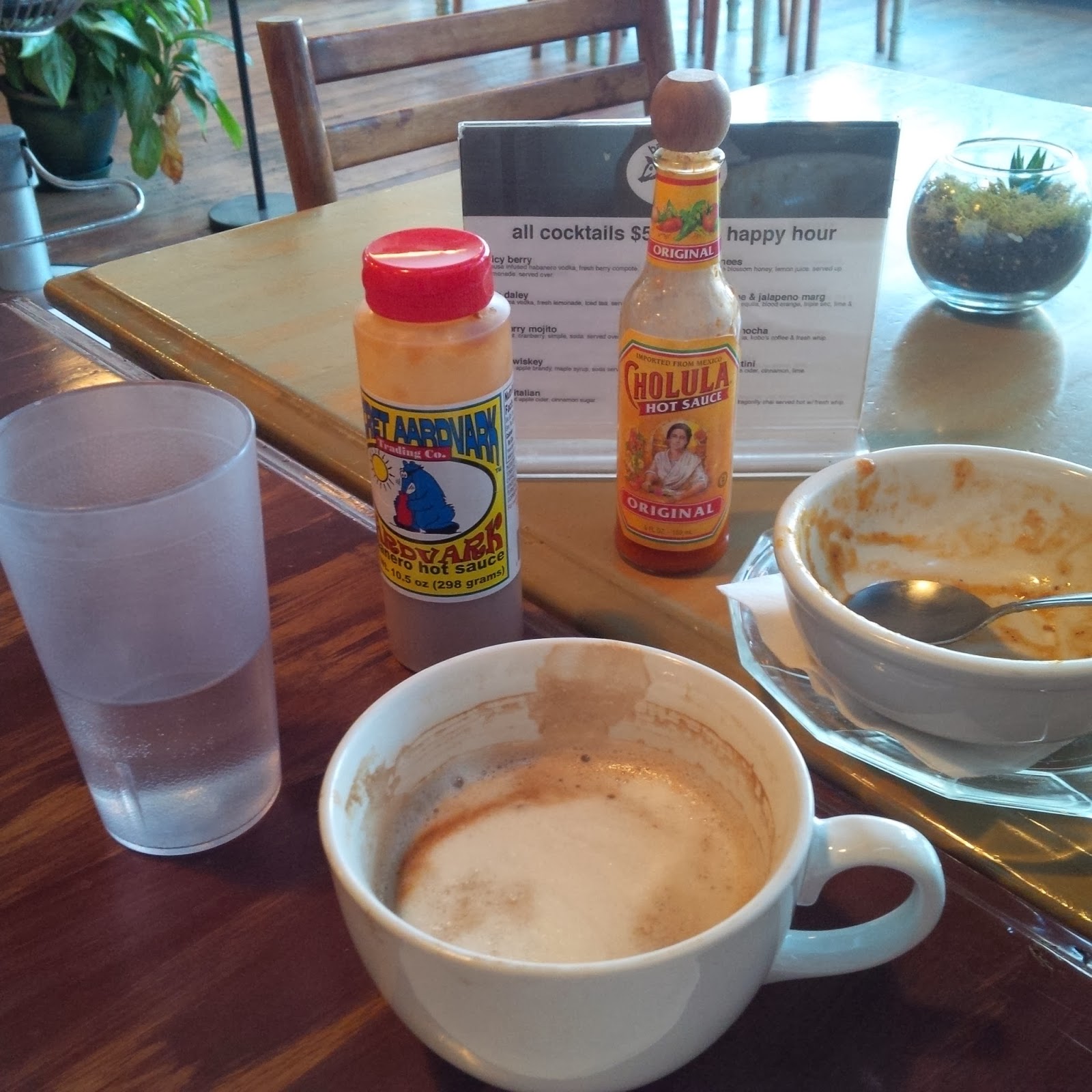
I had an appointment this morning, after which I planned a treat of Morroccan Oatmeal and a latte afterwards at a nearby restaurant. So I took the new book with me for glancing. Much to my delight and surprise, I'm a couple chapters into the book. And I did not put it on my pile when I returned home to change and get ready for work; I put it in my take-to-work bag. I am already mulling over information from the beginning of the book and it is building on an idea I had last week about setting up a manuscript/book-length project group (which may start with 2 or 3 people).

It looks like my latest addition will be one of the "done" books before too long. I haven't read enough to give a review - but in my fast-paced life, I think it is a good testament that it's my carry-with-me book and that the author hooked me in right away.

Thank you, Christi, for sending me the book. Thank you, Becky, for writing the book!
.